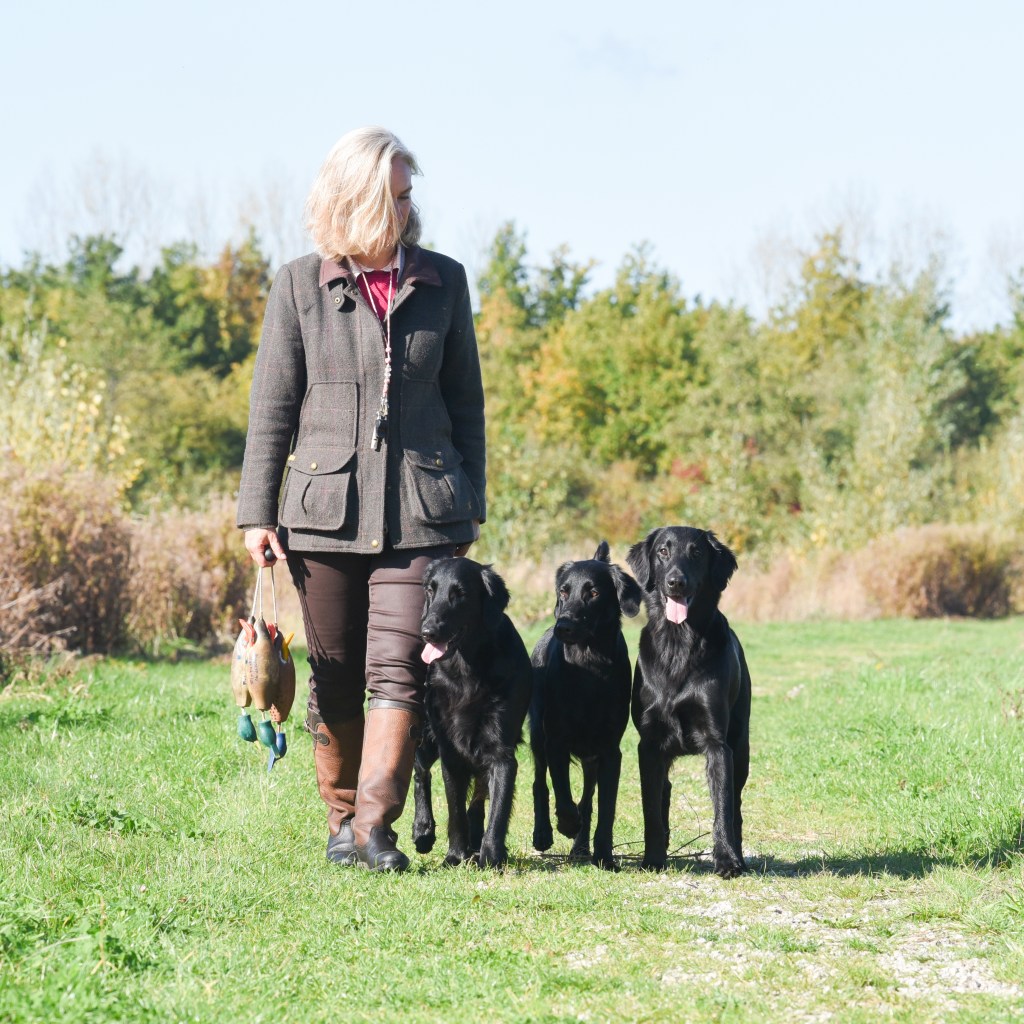
My name is Birgitte van Vondelen – Jørgensen. With my husband Dennis and my three Flatcoated Retrievers (Rumi, Lotte & Kaspar) I live in a village not far from Schiphol airport in The Netherlands. I am Danish by birth and I was brought up with hunting dogs and horses around me, being outdoors most of my childhood time.
Now most of my spare time is dog-time. I love to learn about dogs and training, especially force-free gun dog training and canine behavior has my interest. I am more or less always involved in some kind of course or education on these subjects. At this moment I am on my way to become a kennel club certified trainer.
I provide workshops for working (gun) dogs on themes such as stress reduction and dog behavior. During hunting season you will mostly find me out picking-up or participating in gun dog competitions.
Flatastic breeding philosophy:
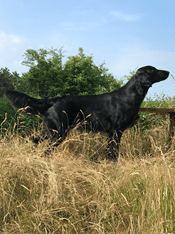
FCI breed standard for the flatcoated retriever
“a bright, active dog of medium size with an intelligent expression, showing power without lumber and raciness without weediness. Generously empowered with natural gun dog ability, optimism and friendliness demonstrated by enthusiastic tail-action, confident and kind.”
I like my dogs to be fast when working. I take honour in having motivated and intelligent dogs being able to continue on long days in the field. Therefore they need to have a good anatomy for perseverance – not too heavily build – and a coat that is not too thick or too thin. A dual purpose gun dog will ensure that function. I like dogs who have some mind of their own to an extend that they do not loose their will to please. I believe flatcoated retrievers can provide that extra bit of problem solving and own initiative when trained properly to maintain their skills and becoming more than just obedient dogs.

Good working & family dogs need a pleasant and strong character and a well balanced temperament. As a breeder I do my utmost to create circumstances in the nurture periode for the puppies to develop good balance of excitement & relaxation skills, so important for their future life as (working) dogs.
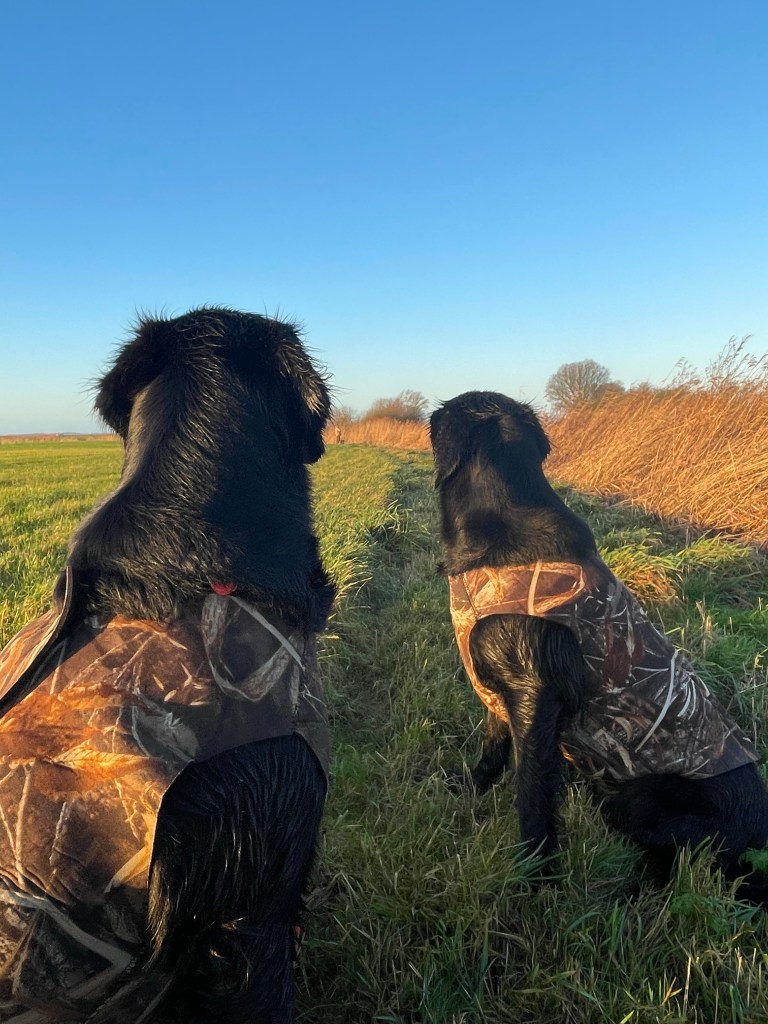
I also feel compelled to breed with the lowest inbreed rate as possible in order to maintain a healthy breed – looking beyond my own interest in the short term. The flatcoated retriever has the second lowest gene pool of all dog breeds – a fact to be concerned about in terms of health and long term preservation of the breed.
I only breed liver and black colored dogs, meaning we dna test on beforehand. I breed only when I intend to keep a puppy myself or in order to maintain breeding material for the future.
Flatastic is a FCI registered kennel since 2020.
Things to consider when considering buying a Flatastic puppy:
I am available for Flatastic “puppy parents” for guidance in caring for and training your new family member. Apart from that I arrange a couple of reunions. This will provide me with information on how our offspring develops and it is a nice chance for owners to enjoy the company of each other and siblings of the dogs.
I ask you to health check your dogs (at 1 year of age I will offer a group check for hips, elbows, eyes and patella) in order to monitor the results of our breeding, thereby contributing in maintaining our fantastic breed.
The welfare of the dogs from our kennel is our main concern. Matching the characters and ambition between new owners and puppy’s is extremely important and we take this task seriously, using the 7 week puppy test and our observations throughout the nursing period to make a match. This will be done at our discretion exclusively, however we will spend a great deal of time to gain knowledge from you on who you are and what you wish for in a dog beforehand. Your honesty is therefore a requirement. We keep a waiting list for buyers in order to familiarize in time.
We breed according to the rules and guidelines of the FRC (FCI registered). FRC is the largest breed club in the Netherlands and in my opinion the only Dutch breed club with breeding guidelines that has proper breed preserving guidelines- extending beyond d individual breeder’s individual interest. Our dogs are extensively health tested and exterior certified. They are actively used in hunting in the Netherlands and Belgium and are tested in Dutch gun dog trials on cold game and dummies.
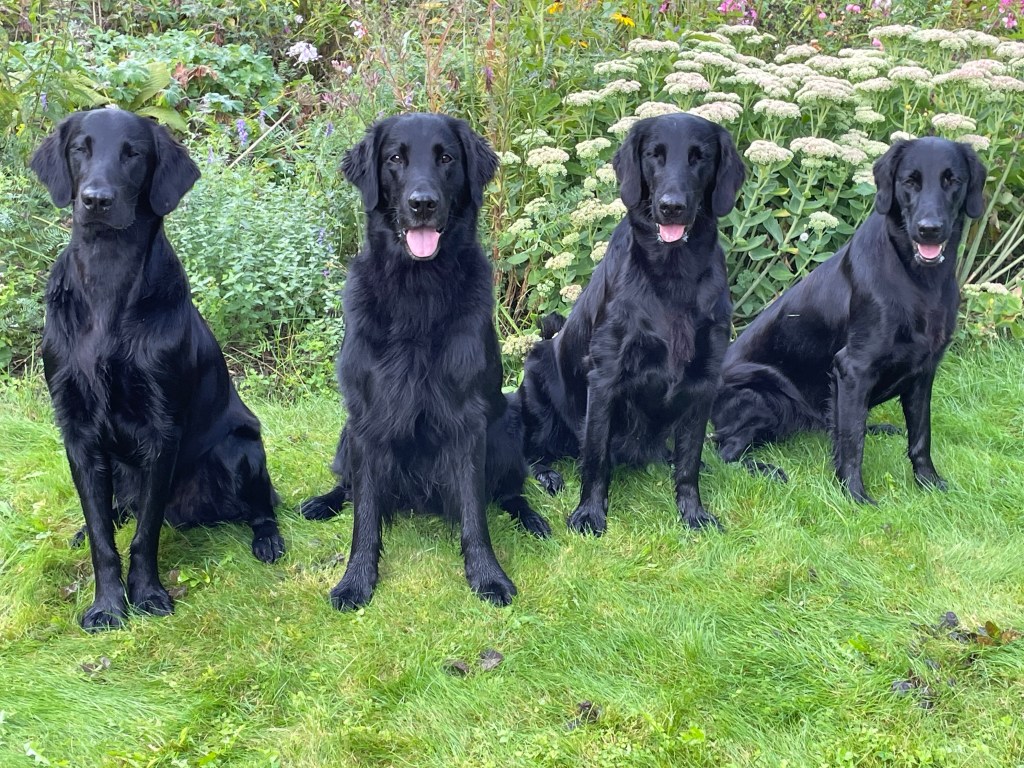
We allow puppies to learn and develop from mommy, siblings and other family members up to 9 weeks and longer if the individual puppy needs to and we can provide the right circumstances for it. This will give puppies a chance to learn some basic skills in social behavior from which they will benefit from the rest of their lives and you as a future owner will benefit too.
We invest in providing knowledge and guidance to new owners – also for those who are experienced handlers. This has proven to benefit the individual puppy in developing.
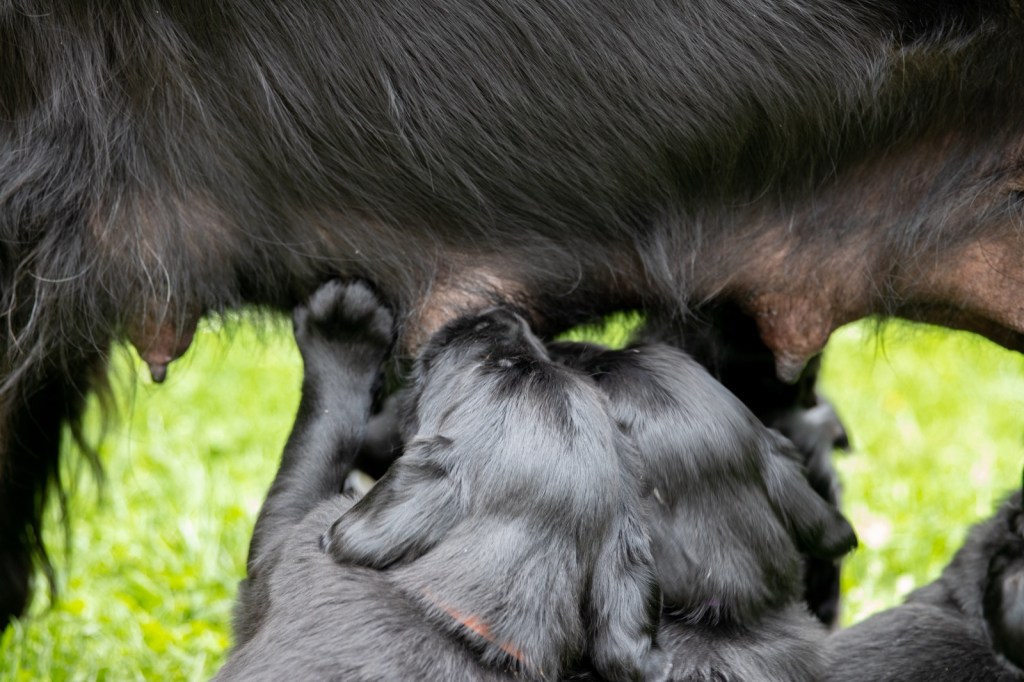
Puppies are monitored on health, dewormed and only vaccinated after (blood) samples proven low in antibodies, saving a toxic burden. They will move to their new forever homes health checked, chipped and pre-habituated on harnas wearing. We provide information on taking care of your puppy according to scientific based modern canine standards and we do not wish to sell puppies to handler maintaining old fashioned, aversive training methods – we do feel strongly that it is a birth right for a dog to be met with a friendly mindset explaining the expectations well before setting boundaries and not the other way around.
In preparation of our first litter in the year 2020, I followed the breeders course of the FRC and the complete Dr Vet Beh Amber Batson’s Puppy course for professionals. In 2023 I have continued my schooling on puppy testing and health.
About flatcoated retrievers in general:
Flatcoated retrievers are known to be sensitive to cancer. I strongly believe that keeping their bodies low on toxins, feeding them with fresh food and allowing plenty of exercise will provide the best health for their bodies in order to prevent diseases.
The breed is one of the few breeds left still being recognized as dual purpose. Meaning they are doing well on exhibitions and are able to work. Having said that – the breed is very diverse. I call it a hybride breed because the blood is put together from different origins – retrievers, spaniels, standing dogs but also new foundlanders. Breeders always breed the traits that we like ourselves and today one will find a diversity in temperament, looks, passion to work and hunting intelligence. The “original” English flatcoated retriever had for instance a shorter, wider head with are more significant stop. This is a functional anatomy as it keeps grass seeds from sliding into the eyes. Today a more flat stop is considered desirable in the show ring as it looks more “royal”. It is however less functional in the field. The same dilemma is going on considering the coat. If you want to win in the showarena one mostly needs dogs with a lot of wavy soft hair. In the field the coat needs to be tight and not to thick and soft. If the structure of your a single hair is a bit harder than being soft moist will run off easier leaving the dog to dry up sooner and not being weighed down by a thick wet coat. A coat too thin is also not desirable – they should be able to keep their warmth also after swimming. Also the angulatiin is crucial. In the ring one wants good triangular angulation – working dogs may have better movement (especially in jumping) if the are a bit less than triangular angulated. Today this difference is becoming bigger and many “working lines” are poor in front angulation. This is a point of attention to keep – including my own line.
Love for the Flatcoated Retriever
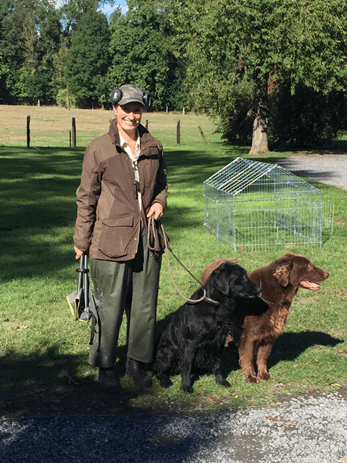
If you don’t like getting licked all over – do not get up close and personal with a flattie. If you can embrace their generous love, they will spoil you everyday with attention and play.
Be aware of generous tail wagging – keep your ancient porcelain and ashtrays away from coffee tables when they are around. They need a little bit of coat care, trimming feet, neck and ears every 2-3 months.
Training a flatcoated retriever takes a handler with a healthy dosis of humor and patience. They are clever and not as submissive as other types of retrievers can be – due to the HPR blood they carry from their ancestors. You must be able to appreciate this fact to enjoy this breed fully. They are water specialists and are therefore always more wet than dry whenever water is in the neighborhood.
A flatcoated retriever is a great family dog – at the same time they are highly agile and move quickly and need plenty of exercise. We recommend to allow kids to be at least 5-6 years of age before inviting a flatcoated puppy into your home to prevent happy tailwags hurting the face of your young children.
Completing the basic training of a flatcoated takes around 3 years and one must not rush things. First of all because their bodies need time to mature well and if pushed at a young age they can easily become stressed and nervous and you will loose the mental connection with them.
In my experience a flatcoated retriever thrives better in a multidog household with access to social interaction as he is bred to be very social. He will not thrive being left home alone for long days on a structural basis.
Our breeding may have more “hunting intelligence” than the average flatcoated retriever because we dominantly breed with dogs being used for practical hunting. They therefore have insight and passion – but also a higher prey drive making training a bit more challenging than average. These talents do not necessarily need to be used for hunting – they make very good sport dogs in search and rescue, man trailing or other disciplines. We will not sell puppies to a home without sufficient activation and challenge – as they will not thrive when not being able to use their talents.
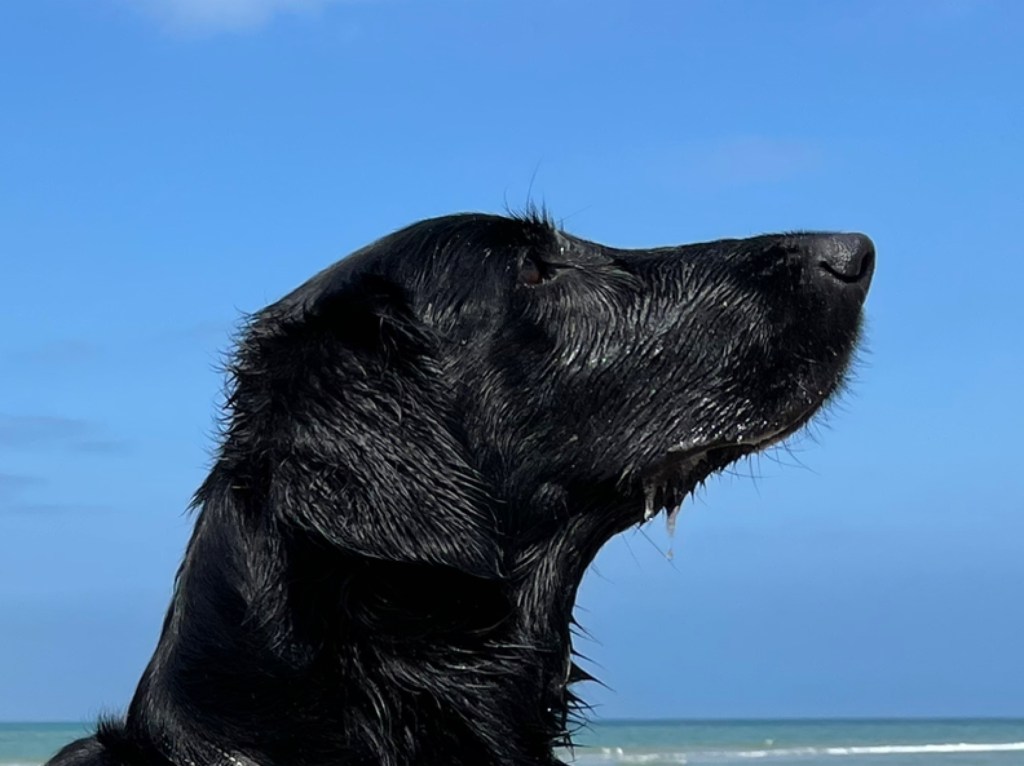
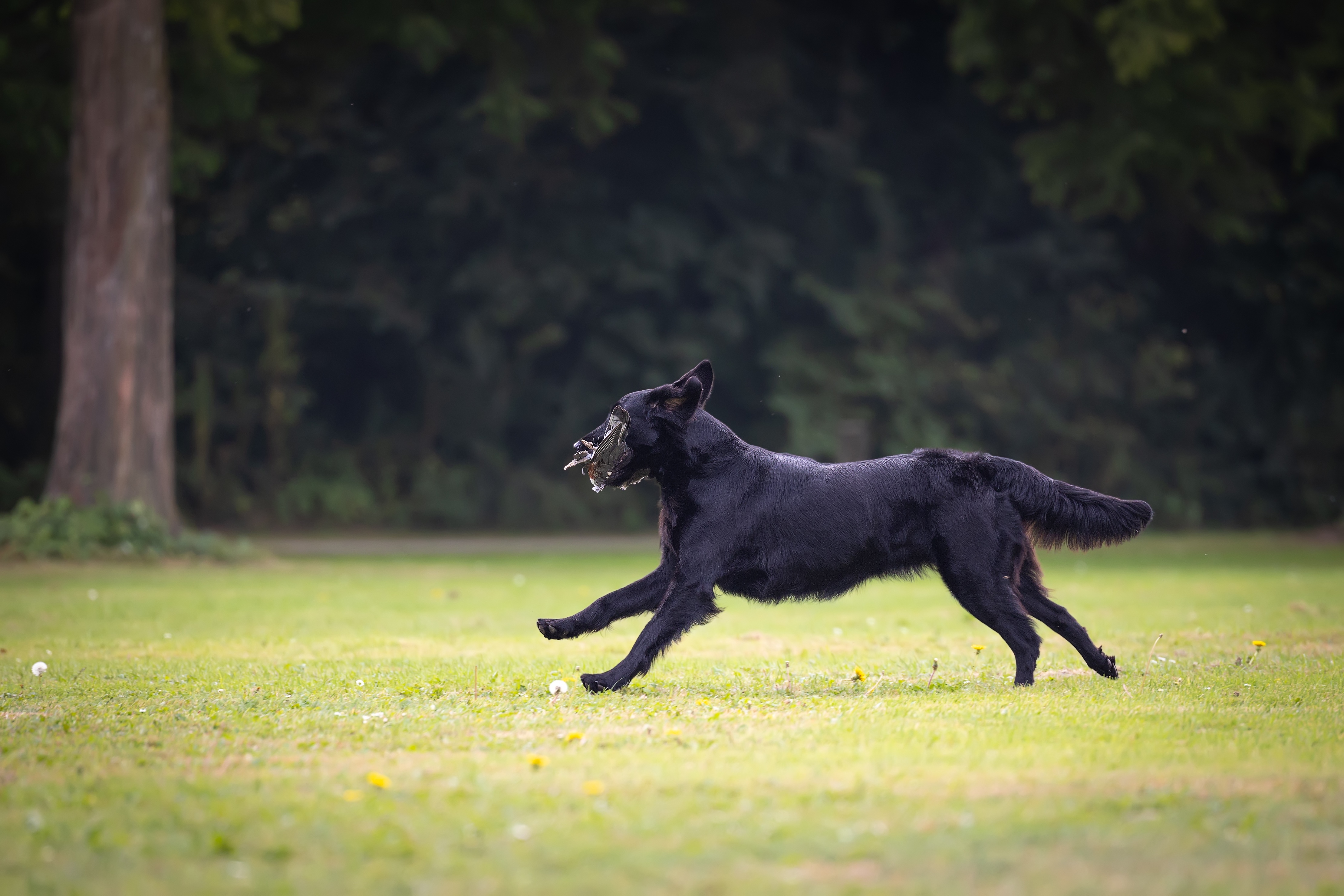
We do present our dogs at exhibitions and they have all had very good and/or excellent feedback- however what is fashionable today in the showring is slowly moving away from function in my opinion. An example is the fact that the stop between the nose and forehead is noticeable and not all flat or round like a bull terrier. This is very important to keep grass seed away from the eye sockets while running through high fields. In the ring my dogs are occasionally commented for lacking flatness. People who know the breed originally will recognize that the stop is perfect to the breed standard. See the above photo of Lotte. It is our choice not to breed out of fashion grounds but to maintain the function.

©️2026 Flatastic
 Flatastic flatcoated retrievers